Showing posts with label social media. Show all posts
Showing posts with label social media. Show all posts
Wednesday, November 18, 2015

Tuesday, October 27, 2015
Social Media Monitoring 2: Under Armour - Rule Yourself

In Part 1 of my Social Media Marketing project, I introduced you to Under Armour and their Rule Yourself campaign. I got a good general sense of their social media presence and the effect "Rule Yourself" had on their popularity. In Part 2 I will dive deeper into their analytics, target demographics, competition and lastly, my recommendations on how Under Armour could improve.
Social Media - Hashtags
Under Armour's campaign not only highlights start athletes, but they are all about the hashtags! They are keeping up with the groundswell in knowing hashtags can generate discussions and a following. In Chapter 10 of Groundswell, they discuss the importance and impact of Twitter. Twitter is where hashtags really originated and since then have become a useful part of Facebook and Instagram, as well. #RuleYourself has become a popular hashtag for the company, but #IWill remains the top mention for the company. "I Will" stems from their campaign "I will what I want" which is aimed for women (it speaks to women who do not wait for permission, advice or affirmation from others in order to go after what they want).
Quickly, Rule Yourself and I Will What I Want merged into UA using both campaigns together. Where you see "Rule Yourself" you now tend to see "I will" which I believe strengthens their brand presence.

UA launched Rule Yourself on August 24th of this year. By looking through their past posts on their Facebook page, the amount of likes ranged anywhere from 200-3,000. Here is their post on launch day:

That is 17,000 likes!
This data below is from the "Likes" section of their facebook. As you can see, a lot more people are "liking" Under Armour (up .6% from last week). Don't let that steep slope scare you. They are comparing yesterday to today in that section and it is only 9:00am.

And here is their fan growth (from Social Baker) over the past 3 months.

OK. So we get that Under Armour is on a steady increase in fan and customer base (their revenues have grown at a rate higher than 20% for 16 straight fiscal quarters! - Forbes). Further down I discuss who these customers and fans are.
Competition
Last week I was able to show you the strong difference between Nike and Under Armour on Google Trends. Now let's take a quick look at some other similar companies.

As you can see, both Nike and Adidas surpass Under Armour on Google Trends. However, UA quickly beat out Adidas to become the second (to Nike) largest sportswear manufacturer in the US. Reebok is in a similar spot (Google-wise) as UA, however their sales are much less. And just because you're being talked about more- doesn't necessarily mean it's a good thing for your brand!
Nike has 23,236,468 people that have "liked" their facebook page. Under Armour pales in comparison with 3,927,732. I believe Nike has been a more established company (founded in 1964) with a longer list of celebrity endorsements, where UA (founded in 1996) is just beginning to get their celebrity backing.
With 50+ years comparing to under 20 years, it's hard to say that UA may not be in the same place as Nike in the future!
Target Market
UA has always seemed to target 18 to 34-year-old athletes and, more specifically, men. But in July of 2014, they made a huge push for women. This article gave some useful information - "The women's apparel division is supplying 30 percent of the company's revenue, a sharp rise from just 18% three years ago, and is well on its way to surpassing the men's division."
This is a great step for Under Armour, in my opinion, and it has obviously done well as far as fans and sales.
 |
| Here is data from Alexa showing their current audience demographics for UnderArmour.com Looks like college women are far surpassing men now! |
 |
| Data from Alexa showing their current audience demographics for facebook.com/underarmour |
But who else can they target? Under Armour does have a youth section. It contributes to about $220 million to the company's revenue and they expect it to grow more than 100% by 2016. While I personally don't see much social media presence on the youth apparel, they obviously aren't doing too shabby. Perhaps they could do that much better if the youth apparel did have a stronger social media presence. Most parents are on social media.

Now let's think of who they aren't targeting that maybe they should.
Under Armour has always been after the athletes and the very active, exercising people. However, a whole other market they could be missing out on is right in front of our faces almost every day...


Those that work outdoors year-round!
It can get very hot in the summer and very cold and snowy in the winter. I'm sure there are those employees that wear Under Armour to work, but it's a market that UA is totally leaving out.
They may not be the star athletes or even the ones that hit the gym everyday, but their jobs are hard and are in extreme temperatures at least 50% of the year. Why shouldn't they be a target demographic? I can already imagine the creative and motivating ads that Under Armour could come up with!
Personally, however, I believe Under Armour should work on sustaining their current market rather than stretch to expand it. They have involved some very serious athletes in their campaigns that can target almost anyone that is a fan of some sort of sport. That is the best decision they could've made (in my opinion). If they continue to make their social media presence based around motivating customers rather than pushing their products, it could continue to show real value. I view Under Armour as a "tough" brand and I believe the sense of pride you get while wearing their clothing proves that.
Please, Under Armour - never aim to be the fashionable/cute ones!
Tuesday, October 20, 2015
The impact of online employee communities!

Their case study is based on Best Buy and the "Blue Shirt Nation" community. Started in 2006, the online community has quickly become a popular place for Best Buy employees. By 2007 BSN had 14,000 employees logging in each month. 85% of them were sales associates in stores. The reason behind BSN was to create a place to listen to what employees were saying and for employees to communicate with each other. This creates a huge sense of support and community for these employees. There's no denying that it would create a sense of pride to be a part of it.

Best Buy has become a model for large companies. As this article mentions, BSN started with hopes it would generate marketing ideas by connecting with store employees. Instead, they got high participation in Best Buy's 401k plan, lower employee turnover and photos of staffers' pets (who doesn't love that?!). And they have seen positive growth in the company due to this community. As Li and Bernoff discuss, employees are able to give their thoughts on new plans Best Buy has and the head honchos actually listen and take their advice.
 |
| This chart (provided by B2C) shows the great value of employee communities. This is a low-cost way to solve some company questions and issues and to ENGAGE the employee. |
It makes me wonder... what other companies are benefitting by creating an online employee community? I've been trying to search for another business who takes advantage of the low-cost, moral-boosting idea and I have to say.. I had a little trouble!
 |
| The vicious circle of unengaged employees (also from B2C). |
"The number one way that you can engage your employees - and by that I mean make them more informed, and productive, and involved in the business- is by opening up the channels of communication. No longer do we live in a world where you just communicate at your employees, you communicate with them."
It makes you wonder... with the great success of the Blue Shirt Nation (and others), why aren't even more major companies taking advantage of this great opportunity? What are your thoughts? Have you ever been a member of an employee-based community? How was your experience?
Wednesday, October 14, 2015
Airlines and Social Media Customer Service
Airlines and social media have been a common topic. With airlines being such huge companies that thrive off of positive customer feedback- a social media presence is important. However, it's more common for customers to post negative comments rather than positive ones. As stated in an article on fortune.com: "The research, which analyzed Twitter posts over three months, finds negative sentiment towards the airlines is significantly higher than positive sentiment, at least on social media. Of the five domestic airlines studied by Crimson Hexagon, average negative sentiment is 47%, while positive sentiment averages just over 20%. And we can’t stop talking about airlines. The firm also found a 209% increase in brand mentions since 2012, confirming that more and more consumers are turning to social media to discuss airlines" 209%! Crazy! I've got to say though... whenever I've had a complaint about an airline- twitter is the first place I go. They respond much quicker through social media than they would any other way (in my experience, anyways). Just like most other companies - no one wants to be bashed publicly. They want to show everyone that they listen and take your concerns seriously.

Here's a pretty cool story of an experience I had on the other side of things... I was at the JetBlue gate waiting for a flight from Boston to Los Angeles when I had a concern about my ticket and seat. I went up to the desk and ask the questions I needed to (I can't even remember the specific concern... is that proof that the good experience I'm about to tell you about replaced any negative thoughts, or what??), the JetBlue attendant was so friendly and so helpful. I went back to my seat and tweeted "Love flying @JetBlue our of @BostonLogan! Best airline ever!". Literally 5 minutes later, the attendant at the gate desk went on to the speaker and said "We want to thank Paige Turcotte for the positive words on Twitter! Please make your way to the desk at your convenience". I walked up to the desk and they gave me a free upgrade to an "even more legroom" seat! I was so surprised and happy! They definitely made a satisfied customer out of me. I even tweeted again and said "Andy, who works at the @JetBlue gate at @BostonLogan needs a raise!" JetBlue tweeted me back saying they would let management know. I don't know what ended up happening with Andy, re: his raise, but I sure hope he got one!
I also believe JetBlue is great at the way they interact with customers via social media. It almost feels like it's your friend responding. They don't worry about posting perfectly structured sentences or speaking the way they would in a courtroom. Here's some examples:
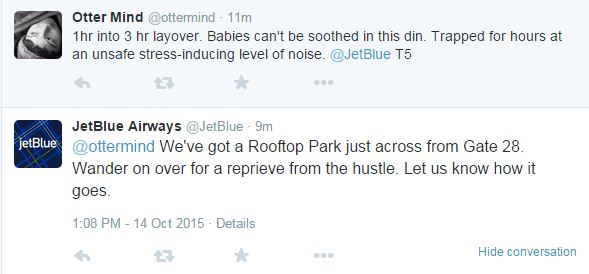
(little note about the one below - my flight has free wifi on it, but I thought that was because our Direct TV didn't work. Another note - I wasn't even mad about the TVs not working, I love JetBlue that much!)

I really appreciate how they seem like normal people and like they actually care about your concerns and have FUN with it.
The power of social media once again proves itself. Actually, as I write this, I am on a JetBlue flight :)
Do you have any great or not-so-great airline experiences? Did you use social media to voice those opinions and how did it work out for you?
I'll leave you with this little video poking fun at airline social media fails!
Monday, September 28, 2015
Groundswell takes down Shkreli!
In the past week or so media has been having a field day with Martin Shkreli, CEO of Turing Pharmaceuticals. It all started when Shkreli decided to raise the price of Daraprim from $13 per pill to $750 per pill (that's 5,455%). Daraprim is a medication used for protozoal infections, commonly used for treatment and prevention of malaria and to treat HIV-positive individuals, as well as cancer sufferers. It has been an affordable drug on the market for 62 years. He claims they would use the profits to further research drugs that would perform "better" than Daraprim. However, HIV doctors state there is no need for a "better" drug...

As you can probably imagine (and most likely saw for yourself), this upset LOTS of people. The cost of pharmaceuticals in general is a topic that many are passionate about. This story is a perfect example of the power of the groundswell working in the most effective way.
You see, Mr. Shkreli thought he could just hike up the price, sit back, and just enjoy his profits... because a hedge fund manager is usually strapped for cash right?
Oh Martin, Martin, Martin... welcome to the real world.
 Shkreli was quickly ripped to shreds by social media. Oh my gosh, did people love it. He became the "most hated man in America"... and this is where the humorous part comes in.
Thanks to the genius of the internet and of internet hackers, every bit of Shkreli's embarrassing choices were made very public. This included his OKCupid profile, a reminder that he was sued for $65 million in 2014 for misusing company money, and that he tried to bribe his ex-girlfriend with $10,000 in exchange for sexual favors (you can read the NSFW details here). Heavy.com highlights some of these moments (and more!) in this article.
Let's not forget to mention that his phone number and home address were released online! I can only imagine the calls he received!
Shkreli's first reaction to all of this was to post Eminem lyrics to his Twitter page (which is now private) and to argue with people, call them names, and continuously defend himself. Maybe he should've taken this class, then he would know that's a big "no-no" for companies to do.
In an awesome turn of events, Shkreli later announced that he would lower the price of Daraprim, but that he would announce the new price in a few weeks (can't wait to hear that "compromise"...). As truthdig.com states, he confirmed that this decision was a result of the reaction to the price hike, saying "there were mistakes made with respect to helping people understand why we took this action. I think that it makes sense to lower the price in response to the anger that was felt by people."
In The Washington Post, reporter Caitlin Dewey reported on what the article headline called “The successful Internet shaming of ‘pharma bro’ Martin Shkreli.” She wrote that although online shaming is typically socially destructive, in this instance “the online mob did all the worst, most destructive things that we tell people to never do—and it worked, spectacularly, for the greater good.”
What are your thoughts on Martin Shkreli? Did the groundswell help shape your opinion of him? Or perhaps you agree with him? I would love to hear other sides of this story!
Monday, September 14, 2015
Advertising on Social Media- Creepy, Genius... or Both?
I'm sure you've seen it every time you log into a social media site. The same bag your sister showed you the other day through email - right there in the middle of your Facebook news feed... but you never searched it on Facebook. In fact, it was a link to an item on a store website, sent to you through GMail, on a web browser (like Google Chrome). What does that have to do with Facebook? And why is Facebook suddenly showing the same bag, knock-off versions, and items similar?
The answer? Cookies.

Ok, not quite those kinds of cookies (but a nice, warm, chocolate chip cookie sounds amazing right now). A cookie is a small amount of data generated by a website and saved by your web browser. Its purpose is to remember information about you, similar to a preference file created by a software application. In other words, they're constantly saving and remembering all that you do.

It's totally normal to believe this is creepy and want to hide away forever and never go on any website ever again.... but who are we kidding? We can't stay off of social media (let alone "normal" websites) for more than one day. So, let try to understand these not-so-yummy cookies and why they exist.
Imagine yourself running a company. In a fantasy world, everyone would just know the products you sell and who you are and know that you're the greatest to ever exist, right? Well, this is the real world. And in the real world in 2015, you've got to find your customer, not the other way around. Now imagine you have a way to find a potential customer who recently looked at a product similar to what you sell. Let's go with hats. You sell great, fashionable hats at discount prices. This potential customer (let's call her Sam) recently googled hats and browsed some overpriced ones on a designer's website. And Sam left her Facebook logged-in at the same time. Now imagine the next time Sam scrolls through Facebook to see what her old high school friends are up to, BOOM - there's a hat that looks exactly like the one she was searching for the day before! The one she sees now is priced much more reasonably and the company is offering free shipping! Sam clicks the "checkout" button and is very pleased with her new purchase from a company she didn't even know existed.
And you just got a sale and, possibly, a returning customer.
Cookies allow companies to consistently remind customers, or potential customers like Sam, that you exist. So, yes, I believe it is creepy to be "stalked" constantly, but in a world where we expect to be found and not have to find, it can make things much easier for both the consumer and the company. I believe this is a huge advancement for advertisement.
What are your thoughts on these social media ads? Can it sometimes be too much? Have you ever made a purchase or decision off of an ad you saw on social media?
Subscribe to:
Posts (Atom)